A way to choose a Rolex that’s not about “price” or “popularity.” Decide based on substance, not status.
The name “Rolex” alone carries enough prestige. But to truly choose a watch of value, it’s not about someone else’s idea of status—it’s about having your own clear reasons.
In this article, I’d like to introduce seven of the most iconic Rolex sports models.
A watch that has a clear reason for why you chose it, not just because of its appearance or price. This is the entrance to Rolex for those who seek meaning in owning something.
What is the Rolex Sports Model (Professional Model)?
Rolex models are broadly categorized into three categories:
Sports Watch (Professional Watch)
Classic Watch (Dress Watch)
Complication Watch
In summary...
Sports Watch (Professional Watch)
Models designed for use in specific sports or activities, featuring excellent functionality and robustness. This article explains the main models in this category.
Classic Watch (Dress Watch)
Characterized by elegant and simple designs intended for formal occasions and business scenes. Functions are relatively simple, but there is a wide variety of materials and dials.
Complication Watch
Strictly speaking, this category overlaps with the above, but refers to models with particularly complex mechanisms (complications). The Sky-Dweller, which combines a GMT function and an annual calendar, is an example.
Comparison and Analysis of the Seven Main Rolex Sports Models
Below, I’ve organized the “Overview and History,” “Main Functions and Specifications,” and “Materials, Price Range, and Target Audience” of each model. Each model was born for a specific purpose, evolved over time, and was chosen by certain people. From there, we’ll explore the “reason for choosing” it.
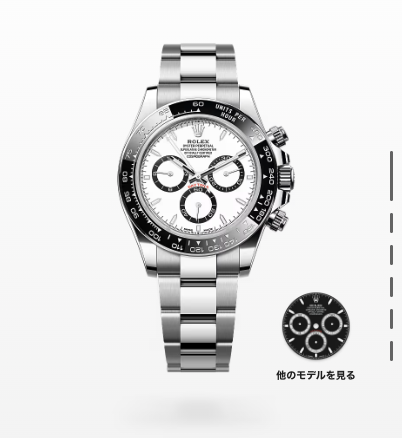
Introduced in 1963, the Cosmograph Daytona is Rolex's only chronograph model. Named after the famous Daytona circuit in Florida, it was originally developed for professional racers. Although it was unpopular at first, it gained fame thanks to actor Paul Newman, and has since evolved through numerous minor changes to become one of the most iconic and sought-after models worldwide.
Design
The Daytona features pushers on the side of the case and a tachymeter scale on the bezel, combining sportiness with elegance. These features were created for measuring car speeds, highlighting the Daytona's racing image. Additionally, the highly legible indexes and refined case form demonstrate Rolex's pursuit of beauty in every detail.
Material, Price & Target
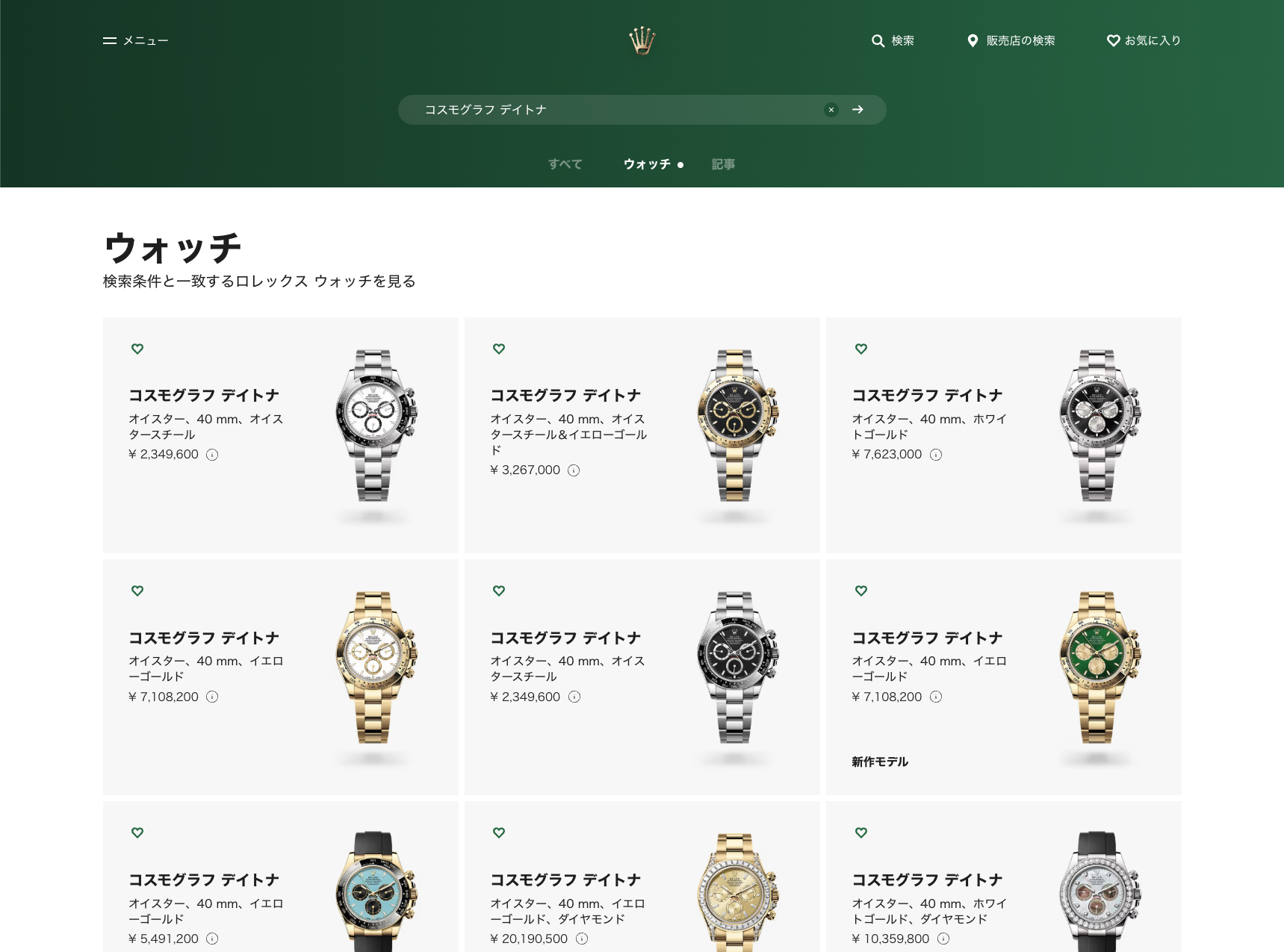
The Daytona is mainly available in stainless steel (Oystersteel), but also comes in gold and platinum versions. The retail price for the stainless steel model is around 1,800,000 yen, while gold and platinum models exceed 3,000,000 yen. Due to high demand, market prices often far exceed retail. Originally developed for motorsport enthusiasts, the Daytona remains a core and highly popular model among luxury chronograph collectors.
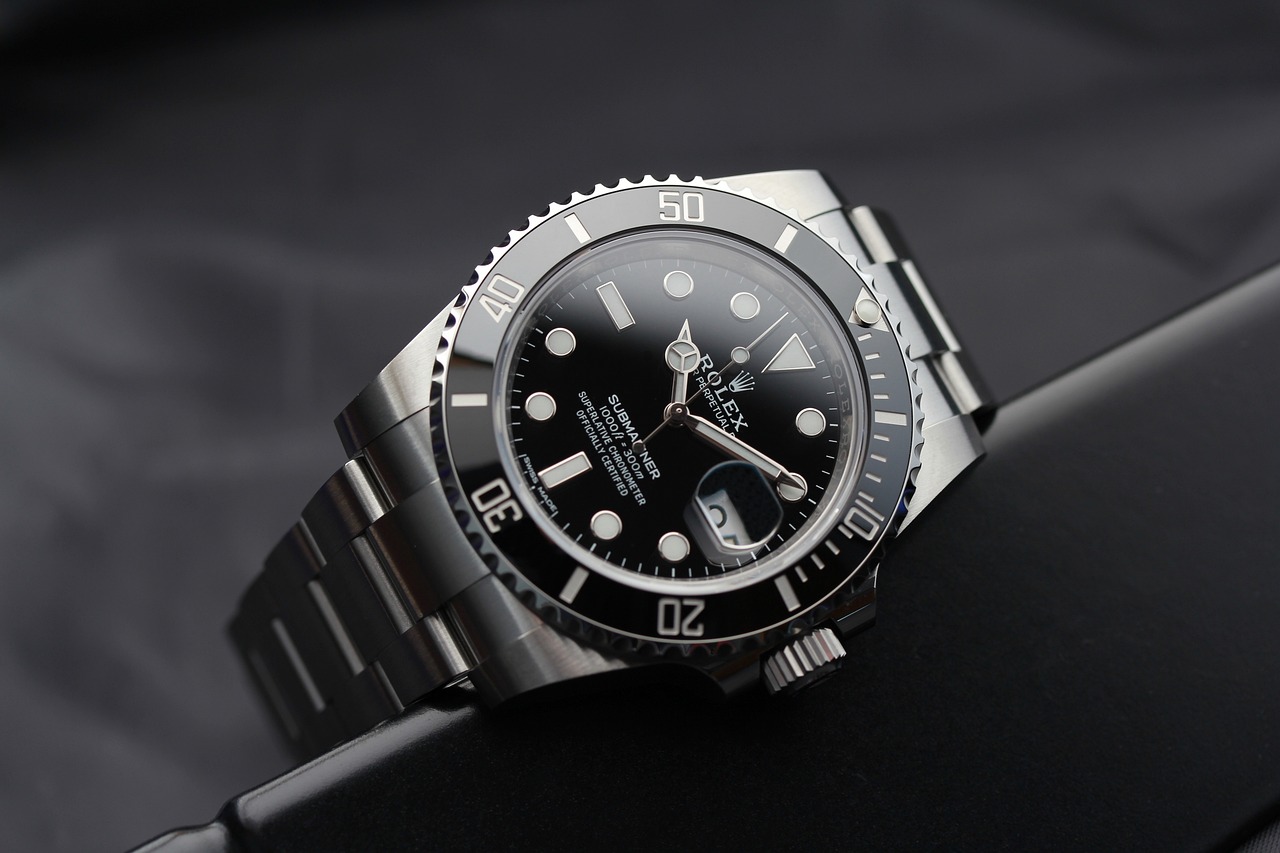
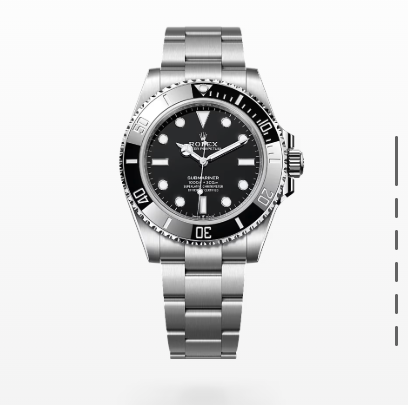
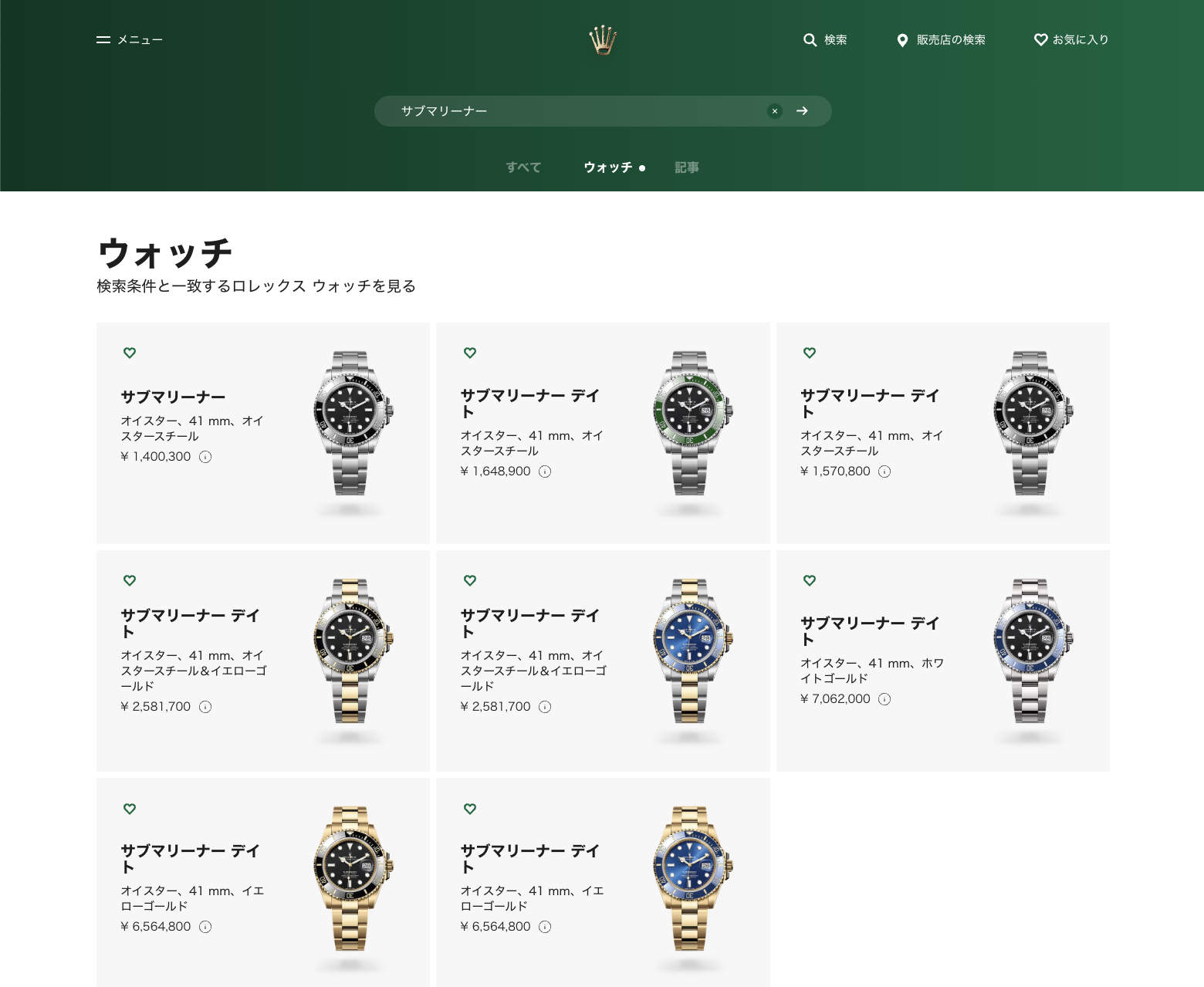
Launched in 1953 and officially unveiled in 1954, the Submariner was the world's first diver's watch with 100m water resistance, attracting global attention at the time. Its rotating bezel allows divers to measure elapsed time underwater, and through continuous model updates, the current version boasts 300m water resistance. As the archetype of diver's watches, the Submariner has been beloved for decades and remains one of Rolex's most popular sports models.
Design
The Submariner features a unidirectional rotating bezel and large luminous indexes, combining practicality with timeless elegance. Its robust Oyster case and screw-down crown provide high water resistance (300m in current models), while the simple dial layout ensures excellent legibility even underwater. The case design is slimmed for comfort, and the crown guards enhance durability, making it suitable for both daily wear and professional diving.
Material, Price & Target
Primarily crafted from stainless steel, the Submariner lineup also includes Rolesor (steel and 18K gold) and solid 18K yellow or white gold models. The retail price in Japan is about 950,000 yen for the no-date version and about 1,080,000 yen for the date version, but due to high demand, pre-owned market prices are often 1.5 to 2 times higher. Originally developed for professional divers, the Submariner is now highly regarded by both divers and watch enthusiasts for its durability and water resistance, making it the quintessential diver's watch.
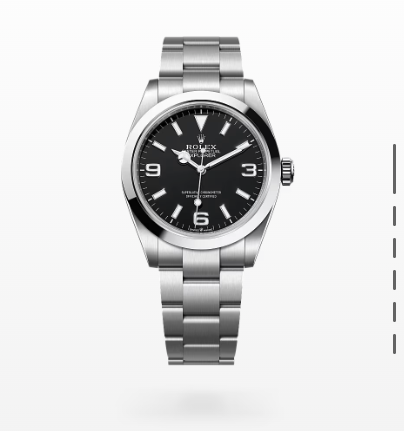
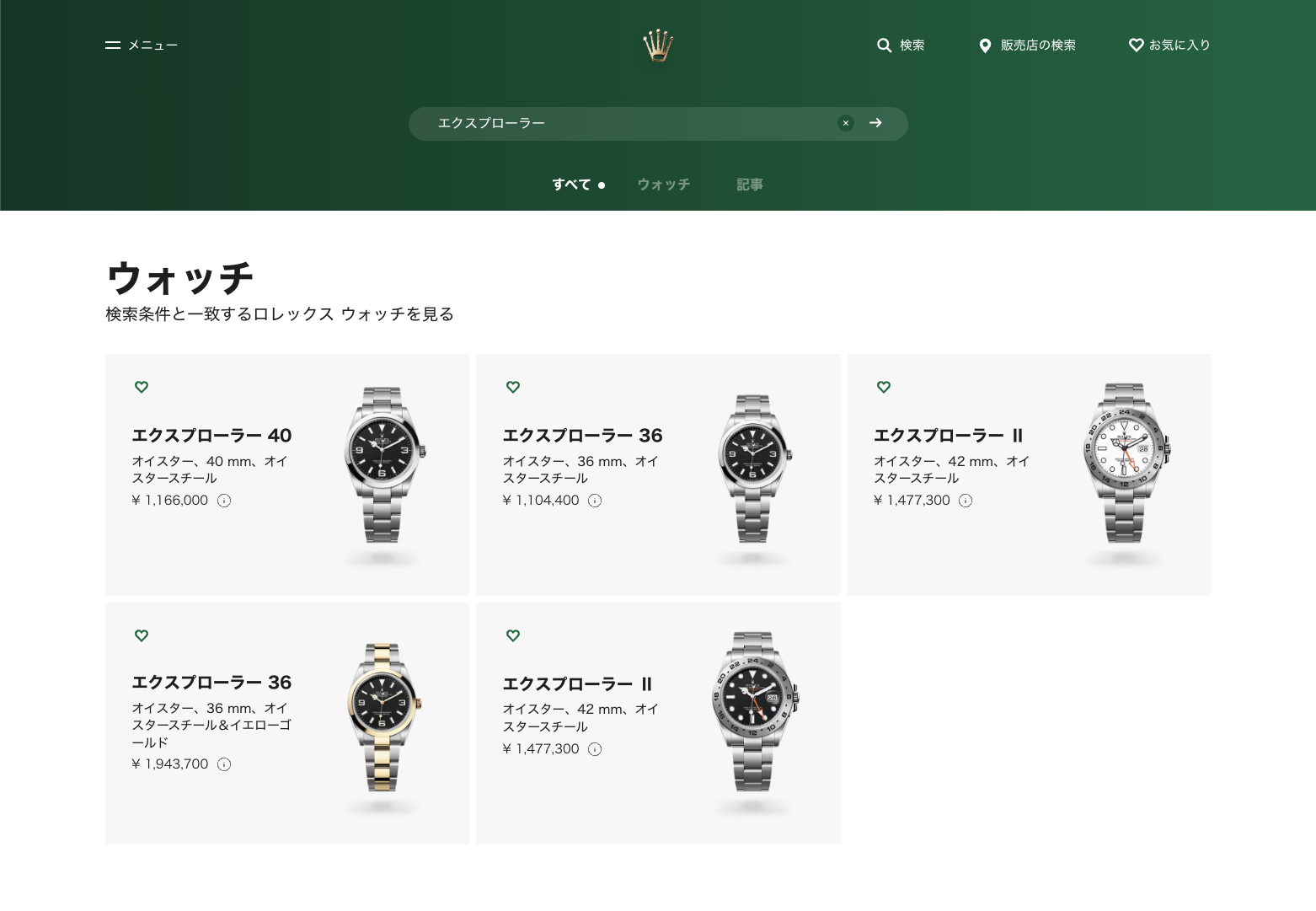
The Explorer I was developed in 1953 to commemorate the first successful ascent of Mount Everest, designed specifically for adventurers. It was Rolex's first professional model, focusing on durability and legibility at high altitudes, and is characterized by its simple black dial with large 3, 6, and 9 numeral indexes. The higher-end Explorer II, introduced in 1971, features a 24-hour hand and fixed bezel for distinguishing day and night in dark environments, such as caves, catering to explorers who spend extended periods without sunlight.
Design
The Explorer I features a stainless steel case of around 36mm that has remained virtually unchanged for over half a century, with a black dial and prominent 3, 6, and 9 Arabic numerals, offering outstanding legibility and a timeless style. In contrast, the 42mm Explorer II is distinguished by its large orange 24-hour hand and fixed 24-hour bezel, allowing users to read both the current time and 24-hour display simultaneously, even in darkness. Both models are designed for maximum functionality and reliability in harsh environments.
Material, Price & Target
For many years, the Explorer models were made exclusively from stainless steel, but the current Explorer I lineup also includes a combination of stainless steel and 18K yellow gold. The retail price is about 710,000 yen for the Explorer I and about 940,000 yen for the Explorer II, but both are difficult to obtain at authorized dealers and often command premium prices on the pre-owned market. The Explorer I was developed for adventurers seeking high durability and legibility, while the Explorer II was designed for explorers working in dark environments such as caves.
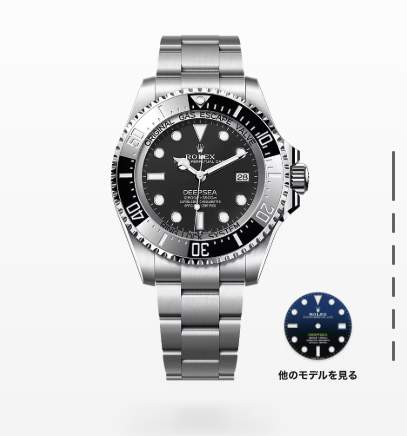
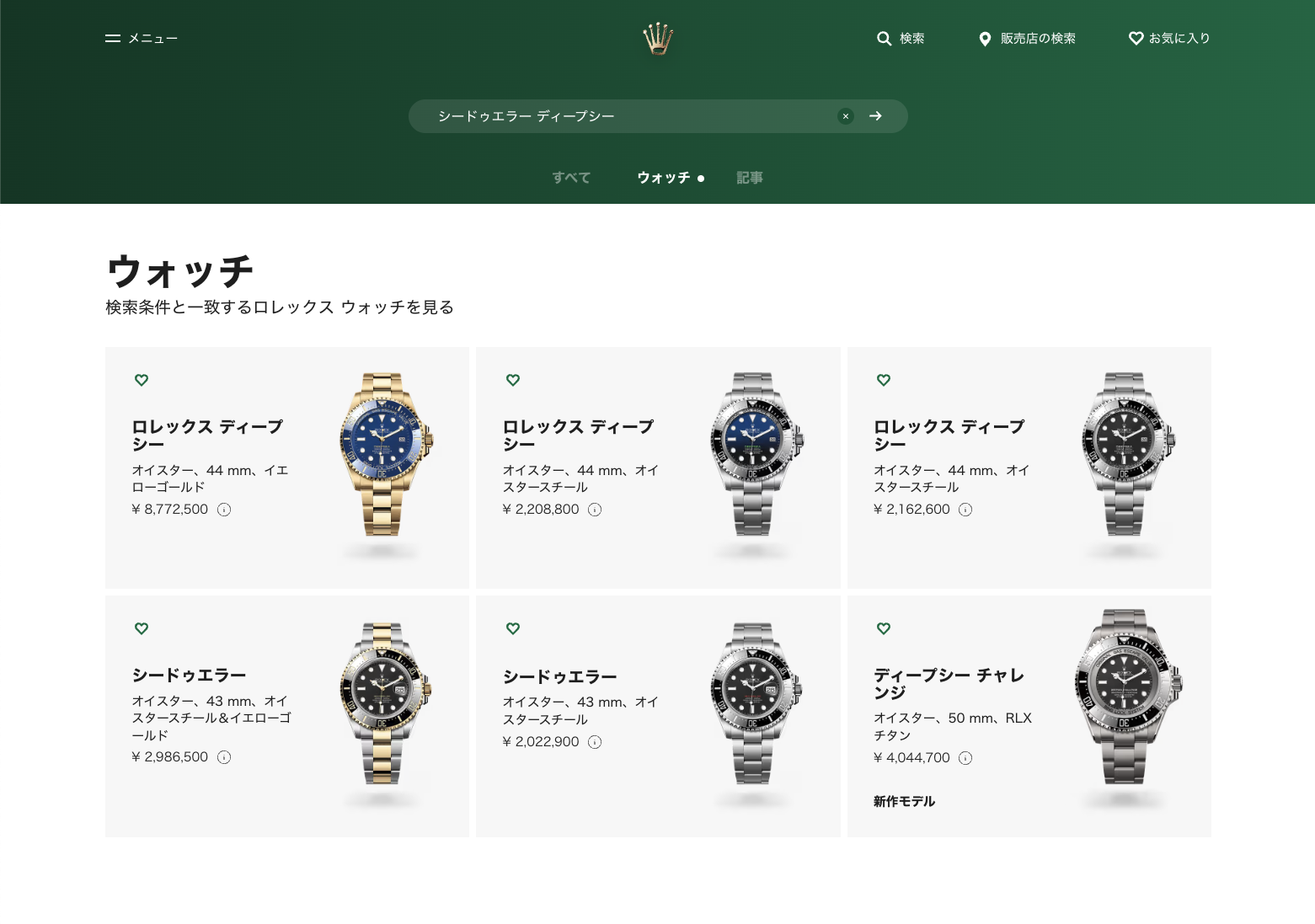
The Sea-Dweller was first introduced in 1967 as a professional diver’s watch, positioned above the Submariner. It was developed to overcome the issue of internal pressure during saturation diving, which the Submariner could not address at the time, by equipping a helium escape valve. The original model had a water resistance of 610 meters, which has been further enhanced in current models to 1,220 meters, and the Deepsea variant boasts an incredible 3,900-meter depth rating.
Design
While the Sea-Dweller’s appearance is similar to the Submariner, it features a thicker case and reinforced sapphire crystal to withstand extreme water pressure. The signature helium escape valve on the case side automatically releases gas during decompression after saturation diving. Although it has a date display, the Sea-Dweller long featured a flat crystal without a Cyclops lens, emphasizing its professional, utilitarian design.
Material, Price & Target
The Sea-Dweller is primarily made of stainless steel, but in 2019, the first two-tone “Rolesor” model (Ref. 126603) was introduced. The retail price is about 1,400,000 yen for the Sea-Dweller and about 1,330,000 yen for the Deepsea (1,360,000 yen for the D-Blue). Due to their rarity, pre-owned prices often exceed retail, ranging from 1,600,000 to 2,000,000 yen. The target audience is professional saturation divers, but thanks to its outstanding performance, it is also chosen by deep-sea explorers, underwater professionals, and collectors seeking the ultimate diver’s watch.
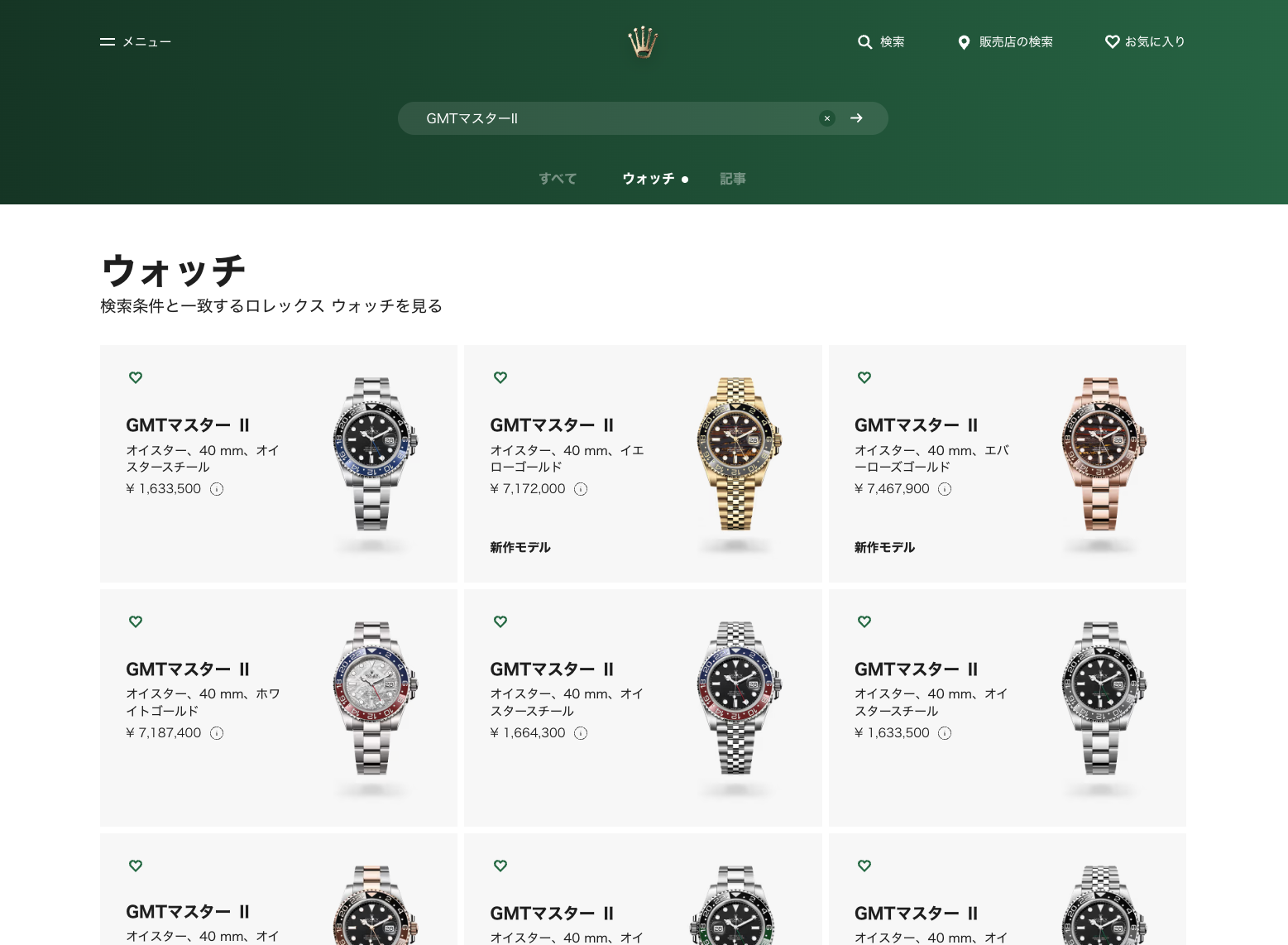
The predecessor to the GMT-Master II, the GMT-Master, was jointly developed with Pan American Airways in 1954 to allow pilots to keep track of multiple time zones during intercontinental flights. Its innovative features included a fourth 24-hour hand and a two-tone red and blue bezel, enabling simultaneous display of home and local times. About 30 years later, in 1983, the GMT-Master II was introduced, allowing independent adjustment of the hour hand and providing unprecedented convenience for business travelers and globetrotters.
Design
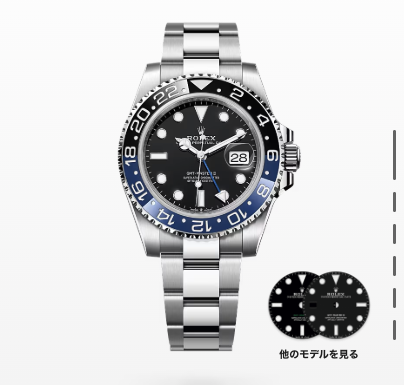
The most distinctive feature of the GMT-Master II is its rotating bezel with 24-hour markings, colored in two tones to indicate day and night. Various color schemes are available, such as the iconic "Pepsi" (red and blue) and "Batman" (black and blue), making the GMT instantly recognizable. Like the Submariner, it uses a robust Oyster case, but instead of focusing on water resistance (rated to 100m), it emphasizes luxury with features like a polished center link on the bracelet.
Material, Price & Target
Stainless steel models are the most popular, but the GMT-Master II is also available in two-tone “Rolesor” (Everose gold and steel) and solid white gold versions, offering a wide variety. Retail prices range from about 1,100,000 to 1,500,000 yen depending on the model, but due to high demand, pre-owned prices—especially for stainless steel models—can reach nearly double the retail price. Originally designed for international pilots and travelers, the GMT-Master II is now beloved by a wide range of users, from travel enthusiasts who need to adjust to different time zones to avid collectors.
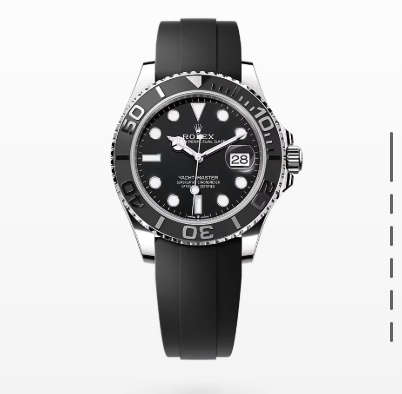
The Yacht-Master was first introduced in 1992 with the debut model (Ref.16628), representing Rolex’s luxury sports line. The original was crafted in 18K yellow gold, combining elegance and water resistance, and was developed for affluent cruising and resort lifestyles. In 2007, the Yacht-Master II was added, featuring a regatta chronograph mechanism for yacht racing. It became the world’s first mechanical regatta watch with a programmable 10-minute countdown timer, operated via pushers at 2 and 4 o’clock.
Design
While the Yacht-Master I shares a similar appearance with the Submariner, it stands out with a lustrous rotating bezel made of platinum or gold and a refined, curvaceous case for a more elegant look. The dial features large hands and indices on a black background, balancing luxury and legibility. The Yacht-Master II, on the other hand, is characterized by its large 44mm case, blue ceramic Ring Command bezel, and unique dial with a semi-circular 10-minute indicator. Its regatta chronograph function is controlled by the pushers, making it highly distinctive among Rolex models.
Material, Price & Target
The Yacht-Master I is available in luxurious materials such as stainless steel and platinum (Rolesium), two-tone Everose gold, and solid yellow or white gold. The Yacht-Master II was initially offered only in solid gold (YG/WG), but later stainless steel and Everose Rolesor models were introduced. Both models are high-priced, and pre-owned pieces often command premium prices. The Yacht-Master I primarily targets affluent individuals enjoying leisurely yachting, while the Yacht-Master II is aimed at sailors participating in yacht races.
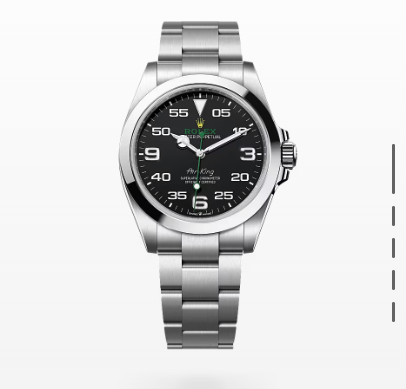
The Air-King is a historic model born in the 1940s as an "homage to aviation," and is the Rolex collection with the oldest pet name. It is said to have been favored by Royal Air Force pilots during World War II, and was named in honor of their achievements. Since then, it has been loved as a simple three-hand watch. Although production was once discontinued, it was revived in 2016 with a larger 40mm case and a new design for improved legibility, and is now positioned in the Professional line.
Design
The current model (Ref.126900) features a black dial with large Arabic numerals at 5-minute intervals and hour markers at 3, 6, and 9, accented by a green Rolex logo and seconds hand. This unique design, reminiscent of aircraft instruments, achieves excellent legibility and creates a sporty atmosphere typical of pilot watches. The 40mm case, 100m water resistance, and enhanced anti-magnetic properties combine instrument-like looks with practicality.
Material, Price & Target
The Air-King is offered only in stainless steel, making it a simple specification. The retail price is around 800,000 yen, which is relatively affordable among Rolex models. Although it tends to fetch high prices on the pre-owned market, it is more stable compared to other sports models. Originally created as a tribute to pilots, the current model inherits that spirit, and many users choose it as their first Rolex as an entry-level piece.
The true value of a Rolex lies not just in its luxurious appearance, but in the design philosophy behind why it was made that way. When choosing the right watch for yourself, it’s important to be able to articulate your reasons. By carefully considering the functions, materials, and construction—and making a choice you truly understand—you’ll find deeper meaning in owning it.